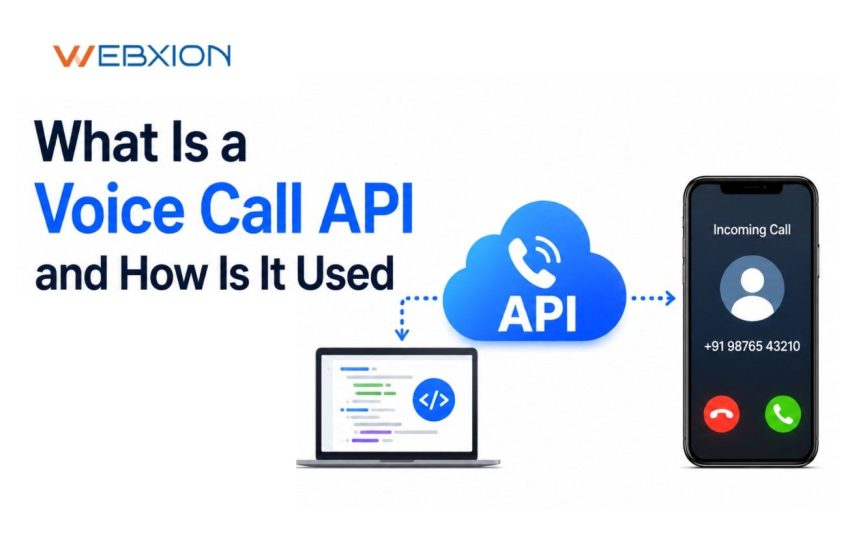
Summary – A Voice Call API is a cloud-based communication solution that helps businesses make, receive, automate, and manage voice calls directly through their software, website, CRM, or mobile application. Instead of manually calling customers, businesses can automate processes like Voice OTP Delivery, appointment reminders, payment alerts, customer support calls, delivery updates, and Promotional Voice Calls campaigns.
Today, organizations across India and around the world use Voice Call APIs to improve customer engagement, reduce operational costs, automate communication workflows, and deliver real-time voice notifications at scale. Industries such as banking, healthcare, education, e-commerce, logistics, and government services rely heavily on Voice Calling APIs to provide fast, secure, and personalized communication experiences.
Have you ever received an automated call reminding you about a doctor’s appointment, informing you about a delivery update, or reading out an OTP when SMS wasn’t available? Behind many of these interactions is a powerful technology called a Voice Call API.
As businesses continue to focus on faster and more personalized customer communication, Voice Call APIs have become an increasingly popular solution. They allow organizations to automate voice calls, send important notifications, verify users through Voice OTP Delivery Services, run Promotional Voice Calls campaigns, and even power intelligent conversations through AI Voice Bot Services.
Whether you’re a startup looking to improve customer engagement or a large enterprise managing thousands of customer interactions daily, a Voice Call API can help you communicate more efficiently while reducing operational effort and costs.
In this guide, we’ll explore what a Voice Call API is, how it works, its key features, benefits, real-world use cases, and why it has become an important part of modern business communication.
What Is a Voice Call API?
A Voice Call API (Application Programming Interface) is a set of tools that allows applications and software systems to automatically initiate, receive, monitor, and manage phone calls.
Simply put, a Voice Call API acts as a bridge between your business software and telecom networks. It enables developers to add voice-calling capabilities to websites, mobile apps, CRM platforms, ERP systems, and customer engagement solutions without building a complete telephony infrastructure from scratch.
For example, when a customer requests an OTP to log in, the system can automatically place a voice call and read out the verification code. Similarly, educational institutions can send admission updates through automated voice calls to thousands of students at the same time.
How Does a Voice Call API Work?
The process is quite simple:
- A business application sends a request to the Voice Call API.
- The API processes the request and connects with telecom carriers.
- The call is initiated automatically.
- A pre-recorded or text-to-speech message is played.
- The system captures call status, duration, and customer responses.
- Real-time reports and analytics are generated.
For example, a hospital management system can automatically call patients a day before their appointment and remind them about their scheduled visit.
This reduces manual work while ensuring important information reaches patients on time.
Key Features of a Voice Call API
Automated Outbound Voice Calls
Businesses can automatically place calls to thousands of customers simultaneously.
Common use cases include:
- Promotional campaigns
- Election awareness campaigns
- Service reminders
- Customer feedback collection
Inbound Call Handling
Customers can call dedicated numbers and interact with automated systems before being connected to a support representative.
Voice OTP Delivery
When SMS delivery is delayed or unavailable, Voice OTP Delivery Services provide a reliable alternative for customer authentication and verification.
These services are commonly used by:
- Banks
- Fintech companies
- E-commerce platforms
- Insurance providers
Interactive Voice Response (IVR)
IVR systems allow customers to navigate menus using keypad inputs or voice commands.
Example:
“Press 1 for Sales, Press 2 for Support, Press 3 for Billing.”
Text-to-Speech (TTS)
Businesses can convert written text into natural-sounding voice messages without recording audio manually.
Call Recording
Calls can be recorded for compliance, quality monitoring, and employee training purposes.
Real-Time Analytics
Track important metrics such as:
- Answer rates
- Call duration
- Customer responses
- Missed calls
- Campaign performance
AI Voice Bot Integration
Modern Voice APIs can easily integrate with AI Voice Bot Services to conduct natural conversations and handle customer queries automatically.
Why Are Businesses Using Voice Call APIs?
The answer is simple: people are often more likely to answer a phone call than read an email.
In India, especially across Tier-2 and Tier-3 cities, voice communication frequently delivers higher engagement rates compared to digital-only communication channels.
For example, a logistics company can instantly notify customers about delivery updates through automated voice calls in their preferred language, improving both customer satisfaction and operational efficiency.
Common Use Cases of Voice Call APIs
OTP Verification and Authentication
Voice OTPs act as a dependable backup when SMS delivery fails.
Appointment Reminders
Hospitals, clinics, and service providers use automated reminders to reduce missed appointments.
Payment Collection Reminders
Banks, NBFCs, and lending companies use automated voice calls to remind customers about upcoming EMIs and payments.
Customer Support Automation
Voice APIs can answer common customer questions and route callers to the correct department.
Emergency Alerts
Government organizations and enterprises use voice broadcasting for:
- Weather alerts
- Public safety announcements
- Disaster notifications
Marketing Campaigns
Businesses use Promotional Voice Calls Service solutions to announce:
- New product launches
- Seasonal offers
- Discounts
- Event invitations
Lead Verification
Educational institutions and real estate companies often verify inquiries through automated voice calls.
Delivery Notifications
Courier and logistics companies use voice calls to inform customers about:
- Delivery schedules
- Shipment updates
- Failed delivery attempts
Benefits of Using a Voice Call API
Faster Communication
Important information reaches customers instantly.
Improved Customer Engagement
Voice communication feels more personal and interactive than text-based messaging.
Cost Savings
Automation reduces manual effort and lowers operational expenses.
Scalability
Whether you’re contacting 100 customers or 1 million, the process remains efficient.
Better Customer Experience
Timely and personalized communication improves customer satisfaction.
Higher Reach
Voice calls can effectively reach users who have limited internet access or low smartphone usage.
Actionable Insights
Detailed analytics help businesses continuously improve communication performance.
Voice Call API vs Traditional Calling Systems
Feature | Voice Call API | Traditional Calling |
Automation | Yes | Limited |
Scalability | High | Low |
Integration | Easy | Complex |
Reporting | Advanced | Basic |
Cost Efficiency | Better | Lower |
AI Integration | Available | Rare |
For businesses looking to scale customer communication, Voice Call APIs offer a much more flexible and future-ready solution.
Which Industries Benefit Most from Voice Call APIs?
Banking and Financial Services
- Transaction alerts
- Fraud warnings
- Voice OTP delivery
- Payment reminders
E-commerce
- Order confirmations
- Delivery notifications
- Customer surveys
Healthcare
- Appointment reminders
- Prescription notifications
- Patient follow-ups
Education
Colleges, universities, and coaching institutes use Voice Call APIs to:
- Send admission updates
- Share exam notifications
- Announce events
Logistics
- Delivery coordination
- Driver communication
- Shipment tracking updates
Government Services
- Public announcements
- Emergency communication
- Citizen awareness campaigns
How to Integrate a Voice Call API Into Your Business?
Step 1: Choose a Reliable Provider
Consider factors such as:
- Uptime
- Network coverage
- Call quality
- Technical support
- Documentation
Step 2: Obtain API Credentials
Most providers offer API keys and authentication tokens.
Step 3: Configure Call Flows
Define:
- Message content
- Trigger events
- Call schedules
- IVR options
Step 4: Integrate With Existing Systems
Connect the API with:
- CRM software
- ERP systems
- Mobile applications
- Websites
Step 5: Test Thoroughly
Verify call delivery, audio quality, reporting accuracy, and overall user experience.
Step 6: Launch and Optimize
Monitor performance regularly and optimize campaigns based on actual results.
What Should You Look for in a Voice Call API Provider?
Before selecting a provider, evaluate:
- Call quality and reliability
- Geographic coverage
- Scalability
- Multi-language support
- Voice OTP capabilities
- IVR functionality
- AI Voice Bot integration
- Security and compliance standards
- Real-time analytics
- Transparent pricing
- Technical support availability
For businesses operating across India, regional language support can play a major role in improving customer engagement.
Voice Call API Pricing: What Impacts the Cost?
Several factors influence pricing:
Call Duration
Longer calls generally cost more.
Call Volume
Higher call volumes often qualify for discounted rates.
Destination Geography
Domestic and international calls may have different pricing structures.
Advanced Features
Additional services such as:
- AI Voice Bot Services
- Call recording
- IVR systems
- Analytics dashboards
can affect the overall cost.
Future Trends in Voice Call APIs
Voice communication technology continues to evolve rapidly.
Some key trends include:
AI-Powered Voice Assistants
Voice bots are becoming increasingly human-like and capable of handling complex conversations.
Conversational AI
Businesses are moving from scripted interactions toward intelligent and natural conversations.
Hyper-Personalization
Voice campaigns are using customer data to deliver more relevant and personalized experiences.
Omnichannel Communication
Voice APIs are increasingly being integrated with:
- SMS
- Mobile apps
- Live chat
to create a seamless customer experience.
Predictive Customer Engagement
AI-powered systems can proactively contact customers based on behavior patterns and predefined business rules.
Best Practices for Using Voice Call APIs
Obtain Proper Consent
Always follow telecom regulations and customer consent requirements.
Personalize Communication
Personalized messages generally perform better than generic broadcasts.
Optimize Call Timing
Schedule calls when customers are most likely to answer.
Use Local Languages
For businesses serving diverse regions across India, multilingual communication can significantly improve engagement rates.
Monitor Analytics
Track campaign performance regularly and make data-driven improvements.
Ensure Compliance
Follow DLT regulations, telecom guidelines, and industry-specific compliance requirements.
Why Is a Voice Call API Essential for Modern Businesses?
A Voice Call API is no longer just a communication tool—it’s a powerful way to automate customer interactions, improve engagement, and deliver important information quickly and reliably. From Voice OTP verification and appointment reminders to promotional campaigns and AI-powered customer support, businesses across industries are using voice technology to create faster, smarter, and more personalized experiences.
To get the best results, choose a trusted technology partner that offers scalable, secure, and compliant communication solutions. Whether you’re looking for a WhatsApp API Provider, RCS Service Provider, Promotional Voice Calls Service, Bulk Voice Calling Service, Transactional Voice Calls Reseller, OTP SMS Service, SMPP Server Service, Bulk SMS Reseller Services, Toll-free Number Provider, Transactional SMS Service, DLT Registration, SMS Notification Service, Outbound Voice Calls Services, Missed Call Services, or advanced AI Chatbot Software, having all these services under one roof can simplify your customer communication strategy.
Connect with WebXion to explore reliable, future-ready CPaaS solutions that help your business communicate better, automate workflows, and deliver exceptional customer experiences across every channel.
Frequently Asked Questions
1. What is a Voice Call API?
A Voice Call API is a software interface that allows applications to automate and manage voice calls through telecom networks.
2. How does a Voice Call API work?
It connects business applications with telecom infrastructure, enabling automated voice communication through API requests.
3. Can Voice Call APIs be used for OTP delivery?
Yes. Voice OTP Delivery Services are widely used when SMS delivery is delayed or unavailable.
4. Are Voice Call APIs secure?
Reputable providers use authentication, encryption, and compliance measures to ensure secure communication.
5. Can Voice Call APIs integrate with CRM platforms?
Yes. Most modern Voice Calling APIs integrate seamlessly with CRM systems, ERP software, websites, and mobile apps.
6. What industries use Voice Call APIs?
Banking, healthcare, education, logistics, e-commerce, insurance, real estate, and government sectors commonly use Voice Call APIs.
7. What is the difference between a Voice Call API and an IVR system?
A Voice Call API provides the calling functionality, while IVR is a feature that enables callers to interact through menu options and voice prompts.
8. Can AI voice bots work with Voice Call APIs?
Yes. Many businesses integrate AI Voice Bot Services with Voice Call APIs to automate customer interactions and support operations.