Summary – Fast bulk SMS delivery helps businesses send OTP verification codes, transaction alerts, promotional messages, and service notifications instantly. A sub-6-second SMS delivery guarantee ensures that messages reach customers quickly using high-throughput SMS gateways, direct telecom operator routes, and intelligent message routing systems.
To improve reliability, modern messaging platforms also offer RCS Business Messaging and WhatsApp fallback, ensuring messages are delivered even if SMS fails. This multi-channel messaging strategy increases delivery rates, customer engagement, and campaign performance.
Key benefits include:
- Sub-6-second SMS delivery for OTP and alerts
- Higher message delivery success with fallback channels
- Better customer engagement and response rates
- Reliable communication for high-volume messaging
- Scalable messaging infrastructure for growing businesses
By combining SMS, RCS, and WhatsApp messaging, businesses can ensure fast and dependable customer communication.
Customers expect messages to arrive instantly—especially when requesting an OTP, payment confirmation, delivery update, or important notification. If a message is delayed, it can interrupt the user experience and reduce trust.
That’s why businesses today rely on fast bulk SMS platforms with sub-6-second delivery speeds. These platforms use direct telecom connections and optimized routing technology to ensure messages are delivered quickly and reliably.
To further improve delivery success, businesses are also adopting multi-channel messaging strategies using SMS, RCS Business Messaging, and WhatsApp Business messaging.
Fast messaging infrastructure helps businesses:
- Deliver OTP authentication codes instantly
- Send real-time transaction alerts
- Improve marketing campaign performance
- Provide order confirmations and delivery updates
- Maintain reliable customer communication
By using high-speed bulk SMS with RCS and WhatsApp fallback, businesses can create faster, more reliable communication experiences for their customers.
What Is Fast Bulk SMS Delivery?
Fast bulk SMS delivery refers to the ability to send large volumes of SMS messages simultaneously while ensuring near-instant delivery to recipients. Businesses often send thousands or even millions of messages during marketing campaigns, alerts, or transactional updates.
A high-speed SMS gateway processes these messages using direct telecom operator connections, intelligent routing algorithms, and optimized messaging infrastructure. This enables messages to reach recipients quickly without delays.
For example, when an e-commerce platform sends order confirmations to thousands of customers during a festive sale, the messaging platform must handle large traffic while maintaining delivery speed.
Key characteristics of fast bulk SMS delivery include:
- High throughput SMS gateways capable of processing thousands of messages per second
- Direct telecom operator connectivity for faster routing
- DLT-compliant messaging infrastructure in India
- Real-time delivery reporting and analytics
- Automatic load balancing during peak traffic
Businesses that rely on slow or indirect SMS routing often face delivery delays, message failures, or reduced engagement.
Fast messaging platforms solve this by optimizing:
- Message routing
- Carrier connections
- Network congestion management
- Message queue prioritization
This ensures that important communications reach customers quickly and reliably.
Why SMS Delivery Speed Is Critical for Businesses?
Message timing can determine whether a communication is successful or not. If a verification code arrives too late, the user may abandon the login process. If a limited-time promotion message arrives after the sale ends, the campaign loses effectiveness.
Fast SMS delivery ensures that businesses communicate with customers exactly when it matters.
For instance, banks sending transaction alerts or fraud detection notifications must deliver messages immediately to ensure customer security.
Businesses benefit from fast messaging in several ways.
Key advantages include:
- Real-time OTP authentication and verification
- Immediate order confirmations and delivery updates
- Time-sensitive flash sale marketing campaigns
- Critical service alerts and emergency notifications
- Improved customer engagement and trust
Speed also directly impacts conversion rates. When customers receive timely alerts, they are more likely to take action.
Industries that depend heavily on fast SMS delivery include:
- Banking and FinTech
- E-commerce platforms
- Travel and hospitality
- Healthcare providers
- Logistics and delivery companies
In these industries, delayed communication can negatively affect both customer satisfaction and operational efficiency.
What Is a Sub-6-Second SMS Delivery Guarantee?
A sub-6-second SMS delivery guarantee means that most messages sent through the platform reach recipients within six seconds under normal network conditions. This level of speed is achieved through advanced messaging infrastructure and optimized routing.
High-performance SMS platforms use direct telecom operator routes instead of multiple intermediary gateways, which reduces latency and improves reliability.
When businesses send messages through a professional messaging platform, the system automatically selects the fastest and most reliable route available.
Several technologies contribute to this fast delivery.
Key infrastructure components include:
- Direct connections with telecom carriers
- High-throughput messaging servers
- Load-balanced message processing
- Smart routing algorithms
- Global messaging gateways
However, some factors may still affect SMS delivery speed.
Common factors include:
- Telecom network congestion
- Incorrect DLT template registration
- International SMS routing delays
- Invalid or inactive phone numbers
Despite these factors, platforms with strong infrastructure maintain consistent high-speed SMS delivery performance.
How Optional RCS & WhatsApp Fallback Improves Message Delivery?
Even though SMS has excellent reach, there are situations where messages may fail to deliver. For example, a phone may be switched off, the network may be temporarily unavailable, or the carrier may block certain routes.
To solve this problem, advanced messaging platforms implement fallback messaging systems.
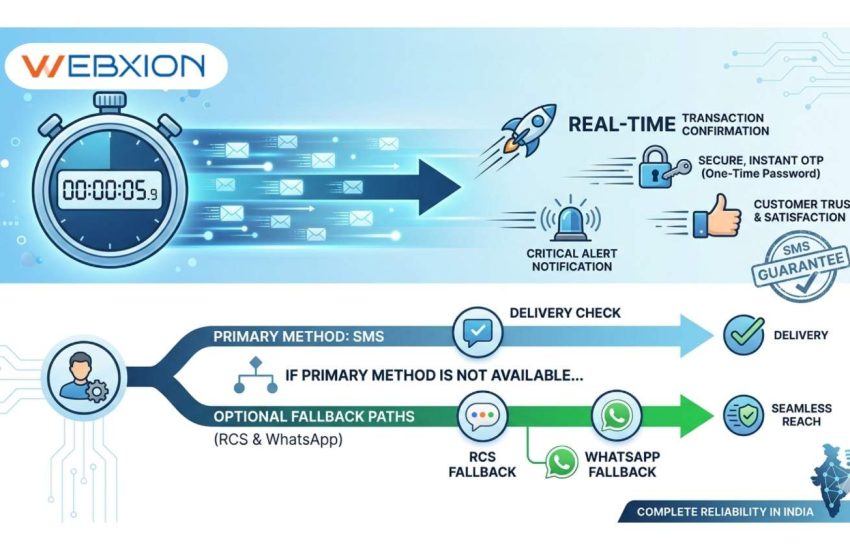
Fallback messaging automatically sends the message through another channel if SMS fails. The most common alternatives are RCS Business Messaging and WhatsApp Business messaging.
This multi-channel strategy ensures that the customer still receives the message.
Benefits of fallback messaging include:
- Higher message delivery success rates
- Seamless multi-channel customer communication
- Reduced message failure rates
- Improved customer engagement
Businesses can configure fallback rules based on delivery status.
Example workflow:
- Send message via SMS
- If SMS fails, send via RCS
- If RCS is unavailable, send via WhatsApp
This approach ensures that important notifications always reach the user.
RCS Business Messaging Fallback
RCS (Rich Communication Services) is the next evolution of SMS messaging. Unlike traditional SMS, RCS supports rich media, interactive features, and branded messaging experiences.
When SMS fails, sending messages through RCS allows businesses to deliver a more engaging communication experience.
For example, an airline sending a flight update through RCS can include boarding passes, images, and interactive buttons.
Key benefits of RCS messaging include:
- Rich media messages including images, videos, and carousels
- Verified business profiles
- Interactive call-to-action buttons
- Real-time messaging analytics
- Enhanced customer engagement
RCS is widely supported on Android devices and continues to grow globally.
Businesses that combine SMS and RCS messaging can deliver both speed and rich customer experiences.
WhatsApp Business Messaging Fallback
WhatsApp has become one of the most popular communication platforms globally, with billions of users. Businesses use the WhatsApp Business Platform to send transactional notifications, marketing updates, and customer support messages.
If SMS delivery fails, WhatsApp fallback messaging ensures the customer still receives the message through a platform they use frequently.
Examples include:
- Delivery updates from logistics companies
- Appointment reminders from healthcare providers
- Payment confirmations from banks
- Customer support responses
Advantages of WhatsApp messaging include:
- Extremely high message open rates
- Secure end-to-end encrypted communication
- Support for rich media and interactive buttons
- Two-way customer conversations
- Integration with AI chatbots and automation tools
This makes WhatsApp an ideal fallback channel for businesses aiming to maintain consistent communication.
SMS vs RCS vs WhatsApp: Which Channel Is Best?
Each messaging channel serves a different purpose, and businesses often benefit from combining them into a multi-channel communication strategy.
SMS
Best for:
- OTP authentication
- Transaction alerts
- High-priority notifications
Advantages:
- Works on all mobile phones
- No internet required
- Fast delivery speed
RCS Messaging
Best for:
- Rich marketing campaigns
- Interactive customer engagement
- Branded communication
Advantages:
- Rich media support
- Verified business branding
- Interactive features
WhatsApp Messaging
Best for:
- Customer support
- Conversational marketing
- Transaction notifications
Advantages:
- High open rates
- Multimedia messaging
- Global reach
A combined approach ensures businesses achieve maximum delivery reliability and customer engagement.
Key Features of a High-Speed Bulk SMS Platform
Not all SMS platforms deliver messages at the same speed. Businesses must choose a platform with enterprise-grade infrastructure and messaging capabilities.
Important features include:
- Sub-6-second SMS delivery speed
- High throughput SMS gateway infrastructure
- Direct telecom operator connectivity
- Real-time delivery reports
- DLT compliance for Indian messaging regulations
- Advanced message routing technology
- API integration for automation
- Multi-channel messaging support
Additional advanced features may include:
- AI-powered message optimization
- Campaign analytics dashboards
- Customer segmentation tools
- Smart retry mechanisms
These features help businesses maintain fast, reliable, and scalable messaging operations.
Industries That Benefit Most From Fast SMS Delivery
Many industries depend heavily on instant messaging to communicate with customers.
Banking and FinTech
Banks use SMS for:
- OTP verification
- Transaction alerts
- Fraud detection notifications
Fast messaging ensures customers receive security alerts immediately.
E-commerce Platforms
Online stores rely on SMS for:
- Order confirmations
- Shipping updates
- Delivery notifications
Fast communication improves customer trust and reduces support queries.
Healthcare Providers
Hospitals and clinics use SMS to send:
- Appointment reminders
- Test report notifications
- Emergency alerts
Instant communication helps improve patient experience.
Logistics and Delivery Services
Courier companies send messages for:
- Shipment tracking
- Delivery updates
- Driver communication
Fast messaging keeps customers informed throughout the delivery process.
Best Practices to Improve SMS Delivery Speed
Businesses can take several steps to ensure their SMS campaigns deliver quickly and successfully.
Recommended best practices include:
- Use approved DLT templates for transactional messaging
- Maintain clean and verified contact lists
- Avoid spam trigger words in promotional campaigns
- Schedule campaigns during optimal delivery times
- Use high-quality SMS gateway providers
Technical strategies include:
- Implement SMS APIs for automation
- Use load balancing for high traffic campaigns
- Monitor delivery reports and analytics
- Use multi-channel fallback messaging
Following these practices improves delivery speed, reliability, and campaign performance.
Future of Business Messaging: Omnichannel Communication
The future of customer communication is moving toward omnichannel messaging platforms that combine multiple channels into a single system.
Businesses are increasingly integrating:
- SMS messaging
- RCS business messaging
- WhatsApp messaging
- AI chatbot automation
- Voice notifications
AI-powered messaging platforms can automatically select the best communication channel based on:
- Customer preferences
- Device capabilities
- Message urgency
- Network conditions
This approach creates a seamless communication experience across channels.
As digital communication continues to evolve, businesses that invest in fast, reliable, and multi-channel messaging infrastructure will gain a significant competitive advantage.
Power Your Business Communication with Faster Messaging
In modern digital communication, speed and reliability are critical. Whether it’s OTP verification, transaction alerts, order confirmations, or marketing campaigns, customers expect messages to arrive instantly. A sub-6-second bulk SMS delivery system ensures your messages reach customers at the right moment, improving both engagement and user experience.
By combining fast SMS delivery with RCS Business Messaging and WhatsApp fallback, businesses can significantly increase message delivery rates, customer interaction, and campaign performance. This multi-channel approach ensures that even if SMS fails, your message still reaches the customer through another trusted platform.
If your business depends on real-time communication and high-impact messaging, it’s time to upgrade to a smarter communication infrastructure with:
- WhatsApp Business Platform services – Bulk messaging, notifications, and engagement campaigns.
- RCS Business Messaging services – Interactive, multimedia messages.
- SMS Notification services – Transactional and promotional alerts.
- Outbound Voice Calls services – Automated reminders and alerts.
- Missed Call Services – Manage callbacks and generate leads.
- AI ChatBots services – 24/7 customer support automation.
Connect with WebXion today and transform how your business communicates with customers—faster, smarter, and more reliably across SMS, RCS, and WhatsApp.
Frequently Asked Questions
1. What is fast bulk SMS delivery?
Fast bulk SMS delivery means sending large volumes of SMS messages instantly through a high-speed SMS gateway. Advanced messaging platforms use direct telecom operator routes and intelligent routing technology to deliver messages within seconds.
Key features include:
- High throughput SMS gateway infrastructure
- Direct telecom connectivity
- DLT-compliant messaging in India
- Real-time delivery reports
- Instant OTP and transactional SMS delivery
Businesses use fast bulk SMS for OTP verification, alerts, promotional campaigns, order updates, and customer notifications.
2. Why is sub-6-second SMS delivery important for OTP messages?
OTP messages must arrive quickly because verification codes usually expire within a short time. Sub-6-second SMS delivery ensures users receive authentication codes instantly.
Benefits include:
- Faster OTP verification and login authentication
- Better customer experience
- Higher transaction success rates
- Improved security for banking and fintech apps
Industries like e-commerce, banking, fintech, and mobile apps depend on instant OTP messaging.
3. What happens if an SMS fails to deliver?
If SMS delivery fails due to network issues or device unavailability, modern messaging platforms use multi-channel fallback messaging.
Common fallback channels include:
- RCS Business Messaging
- WhatsApp Business Messaging
- Push notifications or email
Typical workflow:
- Send message via SMS
- If SMS fails, switch to RCS
- If unavailable, deliver via WhatsApp
This improves message delivery rates and customer communication reliability.
4. How does RCS Business Messaging improve communication?
RCS Business Messaging enhances traditional SMS by enabling rich and interactive communication.
Key features include:
- Images, videos, and rich media messages
- Verified business profiles
- Interactive buttons and quick replies
- Branded messaging experience
Businesses use RCS for marketing campaigns, product promotions, booking confirmations, and customer engagement.
5. What is the average bulk SMS delivery time?
A reliable bulk SMS platform usually delivers messages within 2–6 seconds depending on network conditions.
Factors affecting SMS delivery speed:
- Telecom network congestion
- International vs domestic routing
- DLT compliance and template approval
- Invalid or inactive numbers
Using a high-quality SMS gateway with direct telecom connections ensures faster delivery, higher success rates, and better campaign performance.