
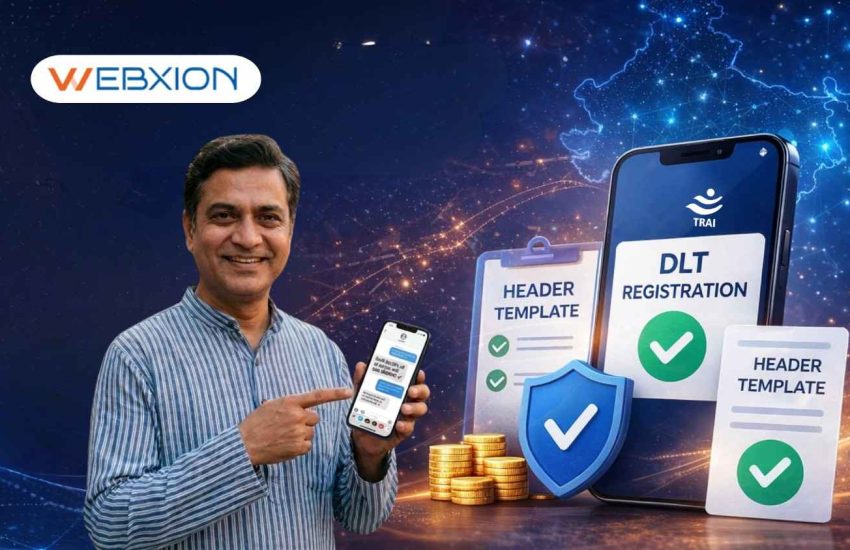
Summary – If your business sends bulk SMS in India, following DLT compliance is mandatory. The system introduced by the Telecom Regulatory Authority of India (TRAI) ensures that businesses send verified and consent-based SMS messages instead of spam. It uses Distributed Ledger Technology to record business registrations, sender IDs, SMS templates, and customer consent across telecom networks.
Before sending OTP alerts, transactional notifications, promotional campaigns, or service updates, businesses must complete DLT registration, which includes Principal Entity verification, Sender ID (header) approval, SMS template registration, and consent management. Telecom operators like Bharti Airtel, Reliance Jio, Vodafone Idea Limited, and BSNL manage these platforms.
For businesses using SMS marketing, OTP authentication, transactional messaging, and customer notification services, DLT compliance improves SMS deliverability, telecom trust, and campaign performance while ensuring full regulatory compliance.
If your business sends OTP messages, promotional offers, order confirmations, or customer alerts, understanding DLT compliance is essential. The Telecom Regulatory Authority of India created the DLT framework to control spam messages and ensure that only verified businesses can send commercial SMS communication.
Today, companies must register their business entity, sender IDs, and SMS templates before sending messages. This applies to many industries, including e-commerce, banking, logistics, healthcare, and digital platforms that rely on SMS for customer engagement.
Once businesses complete the process, they usually experience higher SMS delivery rates, better telecom approval, and more trusted customer communication. Understanding how DLT works helps companies run secure, compliant, and effective bulk SMS campaigns across India.
Why DLT Compliance Matters for Bulk SMS in India?
Bulk SMS is still one of the most effective ways for businesses to communicate with customers. Banks send OTP alerts, e-commerce brands send delivery updates, and healthcare providers send appointment reminders. However, before telecom regulations became stricter, customers often received large volumes of spam and fraudulent SMS messages.
To solve this issue, the Telecom Regulatory Authority of India introduced the DLT framework, which works like a telecom verification system for commercial SMS communication.
Instead of allowing businesses to send SMS freely through gateways, the DLT system verifies who is sending the message, what the message contains, and whether the recipient has consented to receive it. This process protects consumers and ensures that legitimate brands can communicate without being mistaken for spammers.
Why businesses need to follow DLT compliance?
- Prevent spam messaging and telecom fraud
- Protect customer privacy and communication preferences
- Ensure transparent SMS marketing practices
- Improve message authentication across telecom networks
Real-world example
Imagine a fintech startup sending OTP authentication messages for login verification. If their SMS templates are not registered on the DLT platform, telecom operators may block those OTP messages completely, causing login failures for customers. Once the templates and headers are approved, delivery becomes reliable.
Key benefits of following DLT rules
- Higher SMS delivery success rates
- Increased trust in your brand communication
- Reduced chances of telecom filtering or blocking
- A more secure messaging ecosystem for businesses and customers
For businesses that rely on transaction alerts, service notifications, and marketing messages, completing DLT compliance is now a basic requirement.
What Is DLT in Bulk SMS? (Simple Explanation for Businesses)
DLT, or Distributed Ledger Technology, is essentially a telecom verification framework that records every commercial SMS transaction. Think of it as a secure digital ledger where telecom operators store and verify messaging activity.
Every time a business sends an SMS campaign, the telecom system checks whether the sender ID, message template, and recipient consent match the records stored on the DLT platform. Only messages that pass these checks are delivered to customers.
Key components of the DLT messaging ecosystem
When businesses register for bulk SMS communication, they must configure several important elements:
- Principal Entity (PE) – The business sending SMS messages
- Telemarketer – The SMS gateway or messaging provider
- Sender ID (Header) – The brand name appearing in the SMS
- SMS Template – The approved message format
- Consent Template – Proof that the customer agreed to receive messages
Example of how DLT works in practice
Let’s say an online shopping platform sends order confirmation SMS messages.
- The company registers its business entity on a DLT platform.
- A sender ID like SHOPPY is approved.
- An order confirmation message template is registered.
- When the SMS is sent, telecom networks verify the template.
- The message is delivered only if it matches the approved structure.
Because of this system, fraudulent banking alerts, phishing messages, and fake promotional SMS campaigns are significantly reduced.
Who Needs DLT Registration in India?
A common misconception is that only marketing agencies or advertisers need DLT registration. In reality, any organization that sends bulk SMS communication to customers must register on the DLT platform.
This includes businesses sending OTP authentication messages, delivery notifications, payment alerts, or promotional offers.
Businesses that typically require DLT registration
- E-commerce websites sending order confirmations
- Banks sending OTP and transaction alerts
- Ed-tech companies sending course reminders
- Hospitals and clinics sending appointment notifications
- Logistics companies sending delivery updates
- Marketing agencies managing SMS campaigns for clients
Practical example
Consider a logistics company operating in Mumbai, Delhi, and Bangalore that sends shipment tracking messages to thousands of customers daily. Without DLT compliance, telecom networks will automatically block those SMS notifications.
If your business sends messages such as
- OTP authentication codes
- Payment confirmation alerts
- Order dispatch notifications
- Appointment reminders
- Promotional discount campaigns
Then DLT registration is mandatory before sending those messages.
Step-by-Step Process for DLT Registration in India (2026)
At first glance, the DLT registration process may look complicated, but once you understand the steps, it becomes quite manageable. In most cases, businesses complete the entire process within one to three working days, depending on document verification and template approvals.
Step 1: Choose a Telecom DLT Platform Operator
The first step is selecting a telecom operator that provides a DLT registration platform. Businesses only need to register on one operator platform, and the system automatically synchronizes with other telecom networks.
Major telecom DLT platforms are managed by companies such as:
- Bharti Airtel
- Reliance Jio
- Vodafone Idea Limited
- BSNL
Tips for choosing the right platform
- Select an operator that integrates easily with your SMS gateway
- Check the approval turnaround time for headers and templates
- Look for a dashboard that supports bulk messaging APIs
Many businesses prefer working with SMS providers that assist with the entire DLT onboarding process.
Step 2: Principal Entity Registration
The Principal Entity (PE) registration verifies that your business is legitimate and authorized to send commercial SMS messages.
During this stage, businesses submit official documents to telecom operators for verification.
Common documents required
- Business PAN card
- GST registration certificate
- Company incorporation certificate
- Authorized signatory information
- Registered business address proof
Approval timeline
Once the documents are uploaded and verified, telecom operators usually approve the entity registration within 24 to 48 hours.
Practical tip
Make sure your company name on the DLT platform matches your GST or incorporation records exactly. Even small mismatches can delay approval.
Step 3: Sender ID (Header) Registration
A Sender ID, also known as an SMS header, is the name that appears when customers receive a message from your business.
For example:
AMAZON: Your order has been shipped.
ICICIB: Your OTP for login is 123456.
Businesses must register these sender IDs before sending messages.
Types of sender IDs used in SMS communication
- Transactional headers – used for OTP and banking alerts
- Service headers – used for notifications and updates
- Promotional headers – used for marketing campaigns
Header registration rules
- Usually limited to six characters
- Must reflect your brand identity
- Cannot imitate another brand
Example
A travel company named FlyHigh Holidays may register the header FLYHGH to send flight booking confirmations and travel alerts.
What Are SMS Templates and Why Are They Important?
In the DLT ecosystem, businesses cannot send free-form SMS messages. Every message must follow a pre-approved template structure registered on the telecom platform.
This rule ensures that businesses cannot change message content to send spam or misleading offers after approval.
Example of a registered SMS template
Dear {#var#}, your order {#var#} has been shipped. Track it here: {#var#}
In this template, the variables are replaced with actual customer data when the message is sent.
Why template approval is important?
- Ensures compliance with telecom messaging rules
- Reduces spam and fraudulent messages
- Improves SMS delivery reliability
- Allows telecom systems to verify message content automatically
Common template use cases
- OTP authentication alerts
- Order confirmations
- Delivery notifications
- Marketing promotions and sales offers
Types of SMS Templates in the DLT System
Understanding template categories is important because each template type follows different telecom rules and delivery restrictions.
Transactional SMS Templates
Transactional messages are used for critical customer communication, such as authentication alerts and financial notifications.
Common examples
- OTP verification codes
- Banking transaction alerts
- Password reset notifications
- Payment confirmations
These messages are usually allowed 24 hours a day, because they are essential for customer services.
Service Implicit SMS Templates
Service implicit messages are sent to existing customers regarding services they are already using.
Examples
- Delivery status notifications
- Appointment reminders
- Subscription renewal alerts
- Customer support ticket updates
These messages maintain customer engagement without being classified as promotional marketing.
Promotional SMS Templates
Promotional SMS templates are used for advertising campaigns and marketing communication.
Examples include:
- Festival sale promotions
- Discount coupons and limited-time offers
- Loyalty reward announcements
- Event invitations and product launches
Promotional messages can only be sent during approved time windows and require customer consent.
Sender ID Rules Explained (Avoid SMS Rejections)
Sender ID guidelines are strictly monitored in the DLT ecosystem. If headers do not follow telecom regulations, even approved templates may fail to deliver.
Important sender ID rules
- Must clearly represent your business brand
- Cannot impersonate another company
- Must match the registered principal entity
- Must follow telecom character limits
Correct example
ZOMATO: Your food order has been delivered.
Common mistakes businesses make
- Using generic sender names like INFO or NOTICE
- Sending promotional messages through transactional headers
- Registering headers unrelated to the brand name
Following proper header rules ensures consistent SMS delivery across telecom networks.
Latest TRAI DLT Rules for Bulk SMS (2026 Update)
Telecom messaging regulations continue to evolve to protect consumers from unwanted communication. The Telecom Regulatory Authority of India regularly updates DLT guidelines to improve security and transparency.
Important rules businesses must follow
- All SMS templates must be pre-approved
- Message content must match the registered template exactly
- Promotional messages require explicit customer consent
- Telemarketers must be registered on the DLT platform
- Messages are checked against national Do Not Disturb (DND) lists
What these rules mean for businesses?
Organizations that follow these guidelines typically experience:
- Higher SMS delivery success
- Better telecom trust ratings
- Reduced message rejection rates
Common Reasons SMS Campaigns Get Rejected on DLT
Even after completing registration, some SMS campaigns may fail due to configuration errors.
Typical reasons for rejection
- Template mismatch with approved format
- Incorrect or inactive sender ID
- Customer numbers registered on the DND list
- Missing consent template for promotional campaigns
- Incorrect placement of variables in templates
Practical insight
Many companies improve delivery performance by keeping SMS templates simple and avoiding unnecessary wording changes.
Best Practices for Running DLT-Compliant SMS Campaigns
Businesses that follow structured messaging strategies usually see better engagement and fewer delivery issues.
Recommended practices
- Keep SMS templates short and clear
- Use verified sender IDs for each campaign type
- Maintain a record of customer consent
- Monitor delivery reports regularly
- Avoid excessive promotional wording
Example
A retail company promoting festival discounts may register multiple promotional templates instead of editing one template repeatedly. This reduces the chances of telecom template mismatches.
Cost of DLT Registration in India
DLT registration generally requires a small one-time fee, depending on the telecom operator you choose.
Typical charges include
- Principal entity registration fee
- Sender ID registration cost
- SMS template approval charges
For most small businesses and startups, the overall cost is minimal compared to the benefits of compliant SMS communication.
How Bulk SMS Providers Help with DLT Compliance?
For many businesses, navigating DLT dashboards and telecom documentation can feel complicated. That’s why companies often rely on experienced bulk SMS providers for guidance.
Services typically offered by SMS providers
- DLT account setup and registration
- Sender ID and template approval assistance
- Campaign management tools
- SMS API integration for automation
- Delivery analytics and reporting
With the right provider, businesses can simplify compliance and focus on building stronger customer communication strategies.
Start Smarter and Compliant Customer Messaging for Your Business
DLT compliance is an important step for any business sending bulk SMS, OTP alerts, promotional messages, or service notifications in India. Once your business completes the registration process and gets sender IDs and SMS templates approved, you can communicate with customers more confidently while following the rules set by the Telecom Regulatory Authority of India.
Today, customer communication goes beyond traditional SMS. Many businesses now combine multiple messaging channels such as WhatsApp Business Platform services, RCS Business Messaging services, SMS Notification services, Outbound Voice Calls services, Missed Call Services, and AI ChatBots services to create better customer engagement and faster support.
These solutions help businesses send real-time alerts, run marketing campaigns, automate conversations, and improve customer communication across different platforms.
If you want to simplify DLT compliance and build a reliable messaging system for your business, connect with Webxion. Their team can help you set up compliant messaging solutions and modern communication platforms so your business can engage customers more effectively and grow faster.
Frequently Asked Questions About DLT Compliance
1. What is DLT compliance in bulk SMS in India?
DLT compliance is a telecom regulation introduced by the Telecom Regulatory Authority of India to prevent spam messages and ensure businesses send verified SMS communication. It uses Distributed Ledger Technology to register sender IDs, SMS templates, and customer consent.
Key points:
- Mandatory for bulk SMS marketing and transactional SMS
- Requires Principal Entity registration
- Businesses must approve Sender IDs and SMS templates
- Messages are verified against DND databases
2. Is DLT registration mandatory for sending bulk SMS in India?
Yes. Businesses must complete DLT registration before sending SMS campaigns in India.
Requirements include:
- Register as a Principal Entity
- Approve Sender ID (SMS header)
- Submit SMS templates for verification
- Use telecom networks like Bharti Airtel, Reliance Jio, Vodafone Idea Limited, or BSNL
3. How long does the DLT registration process take?
The approval process is usually quick if documents are correct.
Typical timeline:
- Entity registration: 24–48 hours
- Sender ID approval: 1–2 days
- SMS template approval: 24–72 hours
4. What happens if SMS templates are not registered?
If SMS templates are not approved on the DLT platform, telecom operators will block the messages.
Common reasons for rejection:
- Template mismatch
- Unapproved sender ID
- Missing customer consent
- Sending messages to DND numbers
5. Can startups or small businesses use DLT for SMS marketing?
Yes. Startups, SMEs, and local businesses can register on DLT to send compliant SMS campaigns.
Benefits include:
- Better SMS delivery rates
- Higher brand credibility
- Compliance with telecom messaging rules in India



:%20Registration,%20Templates%20&%20Rules%20Explained&media=https://www.webxion.com/wp-content/uploads/2026/03/DLT-Compliance-for-Bulk-SMS-in-India.jpeg)