
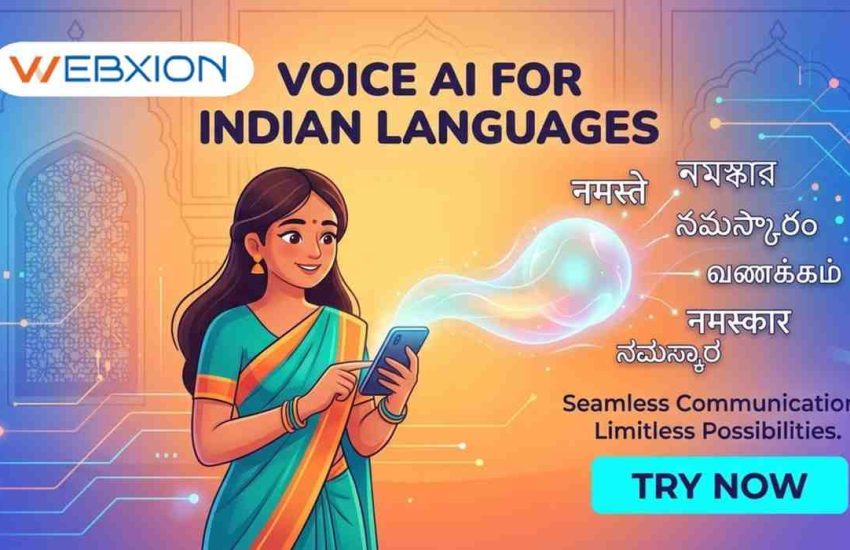
Summary – A Voice AI Agent for Indian languages is an AI-powered virtual voice assistant that can understand, process, and respond to customer conversations in regional Indian languages like Hindi, Tamil, Telugu, Marathi, Bengali, Gujarati, and more. It uses Automatic Speech Recognition (ASR), Natural Language Processing (NLP), and Text-to-Speech (TTS) to automate inbound and outbound calls, customer support, lead qualification, appointment booking, and payment reminders without human intervention.
India’s digital growth is no longer driven only by English-speaking urban users. The fastest-growing internet adoption is happening across Tier 2, Tier 3, and rural markets where customers prefer to speak in Hindi, Marathi, Tamil, Telugu, Bengali, Gujarati, and other regional languages. Businesses that continue to operate only in English-based support systems are increasingly facing engagement gaps, lower response rates, and higher drop-offs.
Voice is the most natural interface for Indian consumers. Many users are more comfortable speaking than typing, especially in regional markets. A Voice AI Agent built specifically for Indian languages enables businesses to automate conversations at scale while maintaining cultural and linguistic relevance.
This guide explains what a Voice AI Agent for Indian languages is, how it works, where it delivers measurable ROI, and how Indian businesses can implement it strategically.
For Indian businesses, Voice AI in regional languages improves customer reach, reduces call center costs, increases response rates in Tier 2 and Tier 3 cities, and enables 24/7 multilingual communication.
What Is a Voice AI Agent?
A Voice AI Agent is a conversational system that interacts with users through voice instead of text. It listens to spoken input, understands intent, and responds naturally in the same language.
How Does It Works?
- Automatic Speech Recognition (ASR) – Converts speech to text
- Natural Language Understanding (NLU) – Understands intent and context
- Decision Engine / Workflow Logic – Determines appropriate response
- Text-to-Speech (TTS) – Converts response back into natural voice
Unlike traditional IVR systems that rely on “Press 1, Press 2,” modern Voice AI agents allow open-ended conversations.
Why Voice AI for Indian Languages Is Critical in India?
India is not a single-language market. While English dominates corporate communication, regional languages dominate customer communication.
According to data from organizations like Internet and Mobile Association of India and NASSCOM, the majority of new internet users prefer regional language content over English.
Ground Reality in Indian Markets
If you run:
- A microfinance business in Uttar Pradesh
- A hospital chain in Tamil Nadu
- An EdTech platform in Maharashtra
- A D2C brand selling in Gujarat
Your customers are more comfortable speaking in their local language.
Voice AI bridges that gap.
Which Indian Languages Can Voice AI Agents Support?
Modern AI voice systems can support:
- Hindi
- Marathi
- Gujarati
- Tamil
- Telugu
- Kannada
- Malayalam
- Bengali
- Punjabi
- Odia
- Assamese
Advanced systems also handle code-mixed conversations like:
- Hinglish (“Mujhe loan eligibility check karna hai”)
- Tanglish
- Benglish
This is critical because Indian customers rarely speak in pure language formats.
How Does a Voice AI Agent Handle Indian Accent & Dialects?
Indian speech patterns vary widely. A customer from Mumbai speaks differently than someone from Lucknow or Coimbatore.
High-performing Voice AI systems are trained on:
- Regional dialect datasets
- Accent variations
- Rural speech patterns
- Noisy background environments (traffic, markets, factories)
The better the training data, the higher the accuracy.
Practical benchmark:
Well-trained Indian Voice AI systems achieve 85%–95% intent recognition accuracy, depending on language and use case.
Voice AI Agent vs Traditional IVR: What’s the Real Difference?
Feature | Traditional IVR | Voice AI Agent |
Interaction Type | Menu-based | Conversational |
Language Flexibility | Limited | Multilingual |
Personalization | Minimal | Dynamic |
Intent Understanding | None | Context-aware |
User Experience | Frustrating | Human-like |
Traditional IVR increases drop-offs.
Voice AI reduces friction and increases resolution rates.
Real-World Use Cases Across Indian Industries
1. Banking & NBFCs
A microfinance NBFC operating across Bihar and Madhya Pradesh automated:
- EMI reminders in Hindi
- Loan eligibility screening
- KYC verification calls
Result:
- 40% reduction in manual calling cost
- 22% increase in payment recovery rates
2. Healthcare Chains in South India
A multi-location hospital network implemented Tamil + Telugu Voice AI for:
- Appointment reminders
- Follow-up care calls
- Diagnostic report notifications
Result:
- Reduced no-shows by 18%
- Improved patient satisfaction scores
3. EdTech Companies Targeting Tier 2 Cities
An EdTech brand used Hindi Voice AI for:
- Parent counseling calls
- Demo session reminders
- Fee follow-ups
Parents responded better in Hindi compared to English outbound calls.
4. E-commerce & D2C Brands
Voice AI agents in Marathi and Gujarati helped:
- Confirm COD orders
- Reduce fake orders
- Cross-sell related products
What Are the Business Benefits of Voice AI in Indian Languages?
1. 24/7 Multilingual Support
Customers can call anytime without waiting for human agents.
2. Cost Reduction
AI voice agents reduce dependency on large call center teams.
3. Higher Regional Engagement
Customers feel heard in their own language.
4. Scalable During Festive Seasons
Handle Diwali, Pongal, Eid, or regional sales spikes effortlessly.
5. Faster Lead Qualification
Pre-screen leads before transferring to sales teams.
What Challenges Exist in Indian Language Voice AI?
Accent Diversity
Indian English and regional languages vary widely.
Code Mixing
Customers switch between languages mid-sentence.
Limited Training Data for Some Dialects
Smaller languages require more localized datasets.
Background Noise
Rural areas and urban markets can affect clarity.
Businesses must choose providers trained specifically on Indian datasets.
How to Choose the Right Voice AI Agent Provider in India?
Ask these practical questions:
- What languages and dialects are supported?
- What is the average speech recognition accuracy?
- Can it handle Hinglish and code-mixed input?
- Does it integrate with CRM systems?
- Is data stored securely within India?
- Can workflows be customized per industry?
Do not choose based only on price. Accuracy directly impacts ROI.
How Much Does a Voice AI Agent Cost in India?
Pricing depends on:
- Per-minute usage
- Number of languages
- Complexity of workflow
- Integration requirements
- Volume of calls
Typical models include:
- Pay-per-minute
- Monthly subscription
- Enterprise custom pricing
ROI often becomes visible within 3–6 months for high-volume businesses.
Future of Voice AI in Indian Languages
The next evolution includes:
- Emotion detection
- Hyper-personalized conversations
- Real-time sentiment analysis
- AI-powered outbound voice campaigns
- Deep integration with messaging platforms
India’s next 500 million digital users will primarily interact in regional languages. Voice will become the primary interface.
Drive Multilingual Growth with AI-Powered Communication
Voice AI for Indian languages is no longer optional for businesses targeting regional India—it is a competitive advantage. When combined with WebXion’s WhatsApp Business Platform services, RCS Business Messaging services, SMS Notification services, Outbound Voice Calls services, Missed Call services, AI ChatBots services, and AI Voice Bot Services, you create a powerful, unified customer communication ecosystem.
Backed by Xion360 expertise in Web Design Services, SEO Services, Pay Per Click Services, Public Relations (PR) Services, Social Media Optimization Services, and Content Writing Services, your business doesn’t just automate conversations—it accelerates measurable digital growth.
Connect with WebXion today and turn regional conversations into real business results.
Frequently Asked Questions
-
What is a Voice AI Agent in Indian languages?
It is an AI-powered system that understands and responds to customer voice input in regional Indian languages like Hindi, Tamil, Marathi, Telugu, and more.
-
Can Voice AI handle Hinglish conversations?
Yes. Advanced systems are trained to process code-mixed language such as Hindi + English combinations used in everyday speech.
-
Is Voice AI secure for banking and financial services?
Yes, when implemented with encryption, compliance standards, and secure hosting within India.
-
Is Voice AI better than IVR?
Yes. Voice AI allows natural conversations, while IVR relies on keypad-based navigation.
-
Which industries benefit most?
Banking, NBFCs, Healthcare, EdTech, E-commerce, Telecom, Government services, and Real Estate.



&media=https://www.webxion.com/wp-content/uploads/2026/03/Voice-AI-Agent-for-Indian-Languages.jpeg)