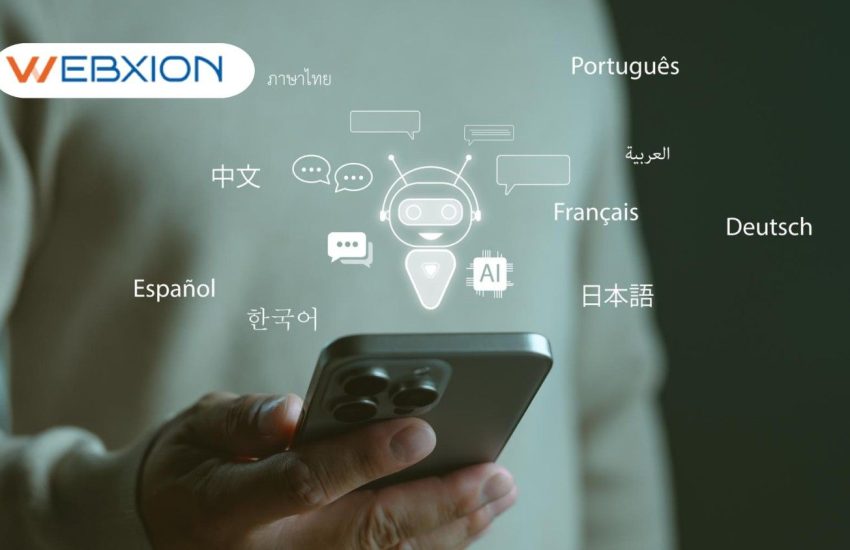
Summary – Multilanguage Voice AI Agents for Business are AI-powered calling systems that can automatically speak, understand, and respond in 10+ languages during outbound or inbound calls. These AI voice agents use Automatic Speech Recognition (ASR), Natural Language Processing (NLP), and Text-to-Speech (TTS) to conduct real-time conversations without human intervention.
Businesses today operate in multilingual markets where customers expect communication in their preferred language. Whether serving diverse regions within India or expanding globally across the Middle East, Southeast Asia, Europe, or North America, language accessibility directly impacts customer trust, engagement, and conversions.
Traditional call centers struggle to scale across multiple languages due to hiring limitations, training complexity, and operational costs. This is where Multilanguage Voice AI Agents are transforming business communication. By enabling AI calling in 10+ languages, companies can automate high-volume conversations while maintaining personalization, accuracy, and regional relevance.
From sales outreach and customer support to payment reminders and appointment confirmations, multilingual AI voice agents help businesses scale efficiently without sacrificing customer experience. This guide explains how they work, where they deliver the most impact, and how to implement them strategically.
Businesses use multilingual AI calling for customer support, sales follow-ups, appointment reminders, payment collections, surveys, and lead qualification. The key benefits include:
- Higher customer engagement in native languages
- 24/7 automated calling without increasing manpower
- Lower operational costs
- Improved conversion rates
- Faster global expansion
For companies operating in multilingual regions like India, the UAE, the US, or Southeast Asia, AI calling in 10+ languages is becoming a competitive necessity rather than a luxury.
What Are Multilanguage Voice AI Agents?
A multilanguage voice AI agent is an automated calling system capable of conducting human-like conversations in multiple languages—without relying on pre-recorded IVR menus.
Unlike traditional IVR systems that force users to “Press 1 for English, Press 2 for Hindi,” AI voice agents can:
- Detect the caller’s language automatically
- Switch languages mid-conversation
- Understand natural speech, accents, and context
- Provide personalized responses
How Does AI Calling in 10+ Languages Work?
Multilingual voice AI relies on three core technologies:
- Automatic Speech Recognition (ASR) – Converts spoken language into text.
- Natural Language Processing (NLP) – Understands intent, sentiment, and context.
- Text-to-Speech (TTS) – Converts responses into natural-sounding speech.
Advanced systems also use:
- Accent adaptation models
- Real-time language detection
- CRM-integrated personalization
- Conversational memory
This is not a robotic script reader. It’s an AI-powered conversational system designed for real interaction.
Why Do Businesses Need AI Calling in 10+ Languages?
1. Customers Prefer Native Language Communication
Research consistently shows that customers are more likely to engage and convert when approached in their native language.
In India alone, businesses often need support in:
- Hindi
- Marathi
- Tamil
- Telugu
- Bengali
- Kannada
- Gujarati
If you’re operating in Mumbai, Pune, Chennai, Hyderabad, or Bengaluru, language flexibility directly impacts engagement rates.
2. Regional Markets Drive Growth
For businesses expanding across:
- India
- Middle East (Arabic + English)
- US Hispanic markets (Spanish + English)
- Southeast Asia
Multilingual AI agents remove language barriers without hiring separate regional teams.
3. 24/7 Support Without Scaling Manpower
Hiring multilingual call center agents is expensive and difficult to scale. AI voice agents can handle thousands of calls simultaneously in different languages.
Multilanguage Voice AI vs Traditional IVR: What’s the Difference?
Feature | Traditional IVR | Multilanguage Voice AI |
Language Support | Limited, menu-based | Dynamic & conversational |
Personalization | Minimal | CRM-integrated |
Mid-call Language Switch | No | Yes |
Context Awareness | Script-based | AI-driven intent recognition |
Scalability | Agent-dependent | Fully automated |
Businesses replacing IVR with AI voice systems report:
- 30–60% reduction in call handling costs
- Higher call completion rates
- Better customer satisfaction scores
Top Use Cases of Multilingual AI Calling
1. Sales & Lead Qualification
AI voice agents can:
- Call leads instantly after form submission
- Speak in the prospect’s preferred language
- Qualify intent using smart questioning
- Transfer hot leads to human sales teams
Example (Real Estate – Mumbai):
A developer targeting buyers in Mumbai and Gujarat used AI calling in Hindi, Marathi, and Gujarati. Result: 42% increase in qualified site visits within 3 months.
2. Payment Reminders & Collections
Fintech and NBFC companies use multilingual AI calling to:
- Send EMI reminders
- Confirm payment commitments
- Handle basic objections
- Escalate only complex cases
Localized language improves repayment response rates significantly.
3. Healthcare Appointment Scheduling
Hospitals in multilingual cities like Mumbai, Dubai, and Singapore use AI voice agents for:
- Appointment confirmations
- Lab report notifications
- Follow-up reminders
Patients respond better when spoken to in their regional language.
4. Education & EdTech Follow-Ups
AI calling supports:
- Admission inquiries
- Fee reminders
- Webinar registrations
- Course enrollment follow-ups
Institutions serving Tier 2 and Tier 3 Indian cities particularly benefit from local-language engagement.
5. Political & Election Outreach
Multilingual AI voice systems are used for:
- Voter awareness campaigns
- Regional messaging
- Survey feedback
Language personalization increases message recall and trust.
Industries Benefiting Most from Multilanguage AI Voice Agents
- Banking & Fintech
- eCommerce & D2C brands
- Real Estate Developers
- Healthcare Chains
- EdTech Platforms
- Travel & Hospitality
- Telecom Operators
- Political Campaign Management
Any industry operating across diverse linguistic audiences gains measurable impact.
How Multilingual AI Calling Improves ROI?
Higher Conversion Rates
Speaking in the customer’s preferred language increases trust and reduces friction.
Lower Operational Costs
No need for:
- Large multilingual call centers
- Shift-based language staffing
- Extensive agent training
Faster Response Time
AI can:
- Call leads within seconds
- Handle peak-hour surges
- Operate 24/7
Measurable Analytics
Advanced platforms provide:
- Language-wise engagement reports
- Call sentiment analysis
- Conversion tracking
- Geographic performance insights
How to Choose the Right Multilanguage Voice AI Provider?
When evaluating solutions, consider:
1. Language Accuracy
Check real conversational demos in regional dialects.
2. Accent Handling
Can the AI understand mixed-language speech (e.g., Hinglish)?
3. CRM & API Integration
Must integrate with:
- Salesforce
- Zoho
- HubSpot
- Custom ERPs
4. Compliance & Security
Ensure compliance with:
- GDPR (Europe)
- DPDP Act (India)
- TCPA (US)
5. Scalability
Can it handle 10,000+ concurrent calls?
What Challenges Exist in Multilingual AI Calling?
Accent & Dialect Variations
India alone has hundreds of dialect variations. AI must be trained on localized datasets.
Cultural Context
Certain phrases work in one region but not another. Tone matters.
Data Privacy
Call recordings must be encrypted and securely stored.
The right provider continuously trains AI models using region-specific datasets.
Future of Multilanguage Voice AI (2026 and Beyond)
Emerging advancements include:
- Emotion-aware voice AI
- Real-time live translation
- Generative AI-powered dynamic conversations
- Hyper-personalized voice experiences
- AI-driven conversational commerce
Businesses investing early will gain strong competitive advantages.
Why Multilanguage Voice AI Matters for Indian & Global Businesses?
In India, regional language internet users are growing faster than English-only users. Businesses targeting:
- Maharashtra
- Tamil Nadu
- Karnataka
- Gujarat
- Uttar Pradesh
must adapt to multilingual communication strategies.
Globally, companies expanding into the Middle East, Europe, or Latin America face similar linguistic diversity.
Multilingual AI calling is no longer experimental. It is becoming infrastructure.
Power Multilingual AI Communication with WebXion & Xion360
Multilanguage Voice AI Agents deliver maximum impact when combined with a complete communication and digital growth ecosystem.
With WebXion’s WhatsApp API Provider, RCS Service Provider, Promotional Voice Calls Service, Bulk Voice Calling Service, Transactional Voice Calls, AI Voice Bot Services, OTP SMS Service, SMPP Server Service, Bulk SMS Reseller Services, Toll-free number provider, Transactional SMS Service, Voice OTP Delivery Services, DLT Registration, SMS Notification Service, Outbound Voice Calls services, Missed Call Services, and AI Chatbot Software, businesses can automate and scale customer conversations across voice and messaging channels.
Backed by Xion360 expertise in Web Design Services, SEO Services, Pay Per Click Services, Public Relations (PR) Services, Social Media Optimization Services, and Content Writing Services, you not only automate engagement—but also drive traffic, generate leads, and improve conversions.
Connect with WebXion today to implement AI Voice Bot Services and build a multilingual communication strategy designed for measurable growth.
Frequently Asked Questions
-
What is a multilingual voice AI agent?
A multilingual voice AI agent is an automated calling system that can understand and respond in multiple languages using speech recognition and AI-driven conversation models.
-
Can AI switch languages during a call?
Yes. Advanced systems detect language changes mid-conversation and respond accordingly.
-
Is multilingual AI calling secure?
Yes, when implemented with encrypted communication, secure cloud storage, and regulatory compliance standards.
-
How accurate is AI calling in regional languages?
Accuracy depends on training data. Well-trained systems achieve 85–95% intent recognition accuracy in supported languages.
-
Is it better than hiring multilingual agents?
For high-volume, repetitive calls—yes. AI reduces cost and scales instantly, while human agents can handle complex escalations.