Summary – RCS (Rich Communication Services) is emerging as one of the most effective customer engagement channels because it delivers rich, interactive, and trusted messaging directly inside the native mobile inbox. It combines the reach of SMS with images, videos, buttons, and verified business branding—without requiring customers to install an app. Backed by Google and supported by telecom operators worldwide, RCS is increasingly viewed as a future-ready messaging standard for businesses focused on engagement, trust, and conversions.
RCS stands for Rich Communication Services and represents the next evolution of traditional SMS. Instead of plain text, RCS enables visually rich, interactive conversations through the default messaging app on Android devices.
Businesses can send product cards, videos, maps, and action buttons, while customers can reply, tap, and complete actions instantly. Because RCS lives inside the native inbox, it feels familiar and reduces friction—leading to higher engagement.
How RCS Works on Android Devices?
RCS is delivered through Google Messages and supported by mobile carriers. When both sender and receiver have RCS-enabled devices and network support, messages are automatically delivered as rich chats rather than standard SMS.
If RCS isn’t supported on a device, messages can fall back to SMS. This ensures consistent delivery and makes RCS practical for large-scale business communication.
Why Traditional SMS Is Losing Effectiveness?
SMS still offers reach, but engagement is steadily declining.
Text-only messages struggle to explain offers clearly, provide no visual validation of the brand, and lack interactive elements. With rising spam and phishing attempts, customer trust in SMS has weakened, especially for promotional and transactional communication.
Modern customers expect clarity, security, and convenience—areas where SMS alone can no longer compete.
What Makes RCS a Breakthrough for Customer Engagement?
RCS turns one-way notifications into real conversations.
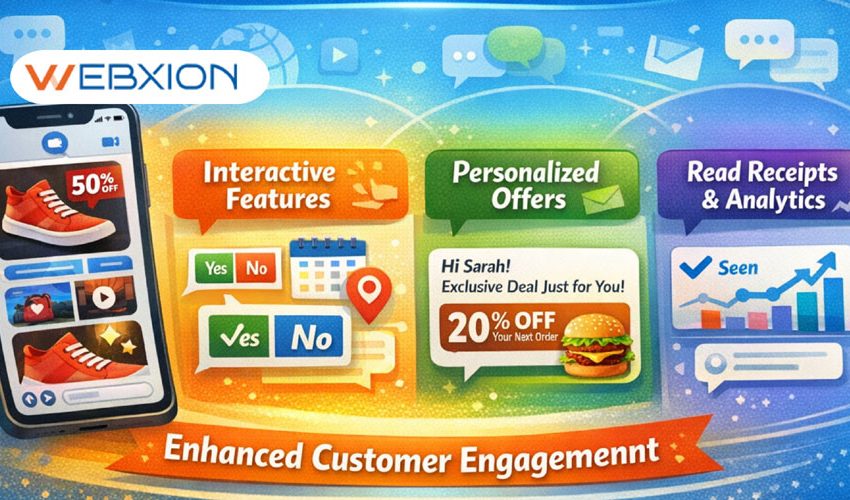
Branded sender profiles display logos and business details, instantly improving credibility. Interactive buttons and quick replies guide users toward actions like booking appointments, tracking orders, or making purchases—without leaving the message.
This blend of trust, clarity, and interaction is why RCS consistently outperforms traditional messaging formats.
RCS vs SMS: Key Engagement Differences
SMS delivers text. RCS delivers experiences.
With RCS, customers see visuals, understand messages faster, and take action with fewer steps. Features like read receipts and interaction tracking allow businesses to optimize campaigns based on real user behavior.
For engagement-driven use cases, RCS provides a clear advantage.
RCS vs WhatsApp Business: Strategic Comparison
WhatsApp Business offers high engagement but depends on app installs, strict template approvals, and platform-specific policies. RCS delivers similar interactivity directly through the native inbox, without requiring users to download or update an app.
For Android-first markets, RCS offers broader reach and greater control than WhatsApp Business.
Key Benefits of RCS for Businesses
RCS improves both performance and brand perception.
Messages typically achieve higher open rates, stronger click-through rates, and better conversion quality than SMS. Rich visuals increase message clarity, while interactivity reduces friction. Businesses also gain deeper insights through engagement analytics.
These benefits translate directly into improved ROI.
How RCS Improves the End-to-End Customer Journey?
RCS shortens the distance between intent and action.
Customers can browse products, confirm bookings, track deliveries, or raise support requests within a single message thread. Eliminating unnecessary redirects keeps users engaged and reduces drop-offs.
The experience feels seamless, fast, and customer-friendly.
RCS Business Messaging Use Cases by Industry
Retail and e-commerce brands use RCS for product launches, personalized offers, abandoned cart recovery, and order tracking.
Banks and financial institutions rely on RCS for secure alerts, reminders, and updates.
Travel and hospitality companies use it for bookings, itinerary changes, and upselling services.
Healthcare providers improve attendance with appointment reminders and follow-ups.
Education platforms communicate admissions, schedules, and fee updates more effectively.
Why RCS Is Especially Powerful for Local and Regional Businesses?
RCS enables precise geo-targeted communication.
Local businesses can send location-aware offers, store directions, service reminders, and booking confirmations. Because RCS business messages arrive in the native inbox, they feel more trustworthy than push notifications or promotional emails.
This makes RCS highly effective for local SEO-focused campaigns and regional customer engagement.
RCS Adoption Trends and Market Growth
Global RCS adoption continues to accelerate due to Android dominance and expanding carrier support. As Google invests further in the RCS ecosystem, businesses are increasingly confident in its long-term viability.
Mobile-first markets are leading this growth.
RCS Messaging Growth in India
In India, RCS adoption is rising quickly.
Android dominates the smartphone market, and SMS remains deeply embedded in daily communication. RCS builds on this familiarity while adding modern capabilities, making it ideal for Indian enterprises, SMBs, and local service providers across retail, BFSI, logistics, and education.
RCS Security and Brand Trust Advantages
Trust is one of RCS’s strongest differentiators.
Verified sender profiles help customers instantly identify legitimate businesses. Carrier-level controls reduce spam and impersonation risks, making RCS suitable for sensitive communications such as payments, alerts, and account updates.
Higher trust leads to higher engagement.
How to Get Started With RCS Business Messaging?
To launch RCS, businesses typically choose an RCS provider, complete brand verification, and design rich message templates. Existing SMS workflows can often be upgraded without major technical changes.
Once live, campaigns can be refined using engagement data and customer responses.
Best Practices for High-Performing RCS Campaigns
Effective RCS campaigns focus on relevance and simplicity.
Use visuals that add clarity, keep CTAs direct, personalize messages using behavior and location data, and test different formats. Avoid over-messaging—RCS performs best when each interaction feels useful.
Common Challenges and Limitations of RCS
RCS currently has limited support on iOS devices, and awareness among businesses is still growing. Creative planning is required to fully utilize its features.
Despite these challenges, RCS complements SMS and strengthens omnichannel communication strategies.
When RCS Makes Sense in an Omnichannel Strategy?
RCS works best alongside SMS, email, and app messaging.
It handles rich, high-intent interactions, while SMS provides fallback reach. Together, these channels create a resilient and flexible customer engagement framework.
Is RCS the Right Channel for Your Business?
RCS is ideal for businesses targeting Android-heavy audiences, running transactional or promotional campaigns, and prioritizing trust and engagement over raw reach.
If your goal is to move customers from message to action faster, RCS is a strong strategic choice.
Turn Everyday Messages Into High-Impact Conversations
With WebXion’s WhatsApp API Provider, RCS Service Provider, Promotional Voice Calls Service, Bulk Voice Calling Service, Transactional Voice Calls, AI Voice Bot Services, OTP SMS Service, SMPP Server Service, Bulk SMS Reseller Services, Toll-free number provider, Transactional SMS Service, Voice OTP Delivery Services, DLT Registration, SMS Notification Service, Outbound Voice Calls services, Missed Call Services, and AI Chatbot Software , your brand appears verified, engaging, and impossible to overlook—right inside the customer’s native inbox. Powered by rich media, branded layouts, and instant CTAs, RCS transforms everyday messages into immersive experiences that build credibility and drive real action.
Get in touch with WebXion to craft RCS journeys aligned with your industry, market, and business objectives. From strategy and deployment to continuous optimization, our experts help you turn customer attention into measurable, performance-driven results.
Frequently Asked Questions
-
What is RCS used for in marketing?
RCS is used for interactive promotions, personalized offers, and transactional communication.
-
Is RCS better than SMS?
RCS offers richer content, verified branding, and higher engagement while maintaining native inbox delivery.
-
Is RCS secure for business messaging?
Yes, RCS includes verified senders and carrier-level security controls.
-
How much does RCS messaging cost?
Pricing varies by provider, but higher engagement often delivers better ROI than SMS.